✈️ Free Express Shipping to USA via JapanPost EMS | 100% Guaranteed Authentic from Tokyo
How Japanese Luxury Auctions Work: A Guide to Japanese Vintage Bags

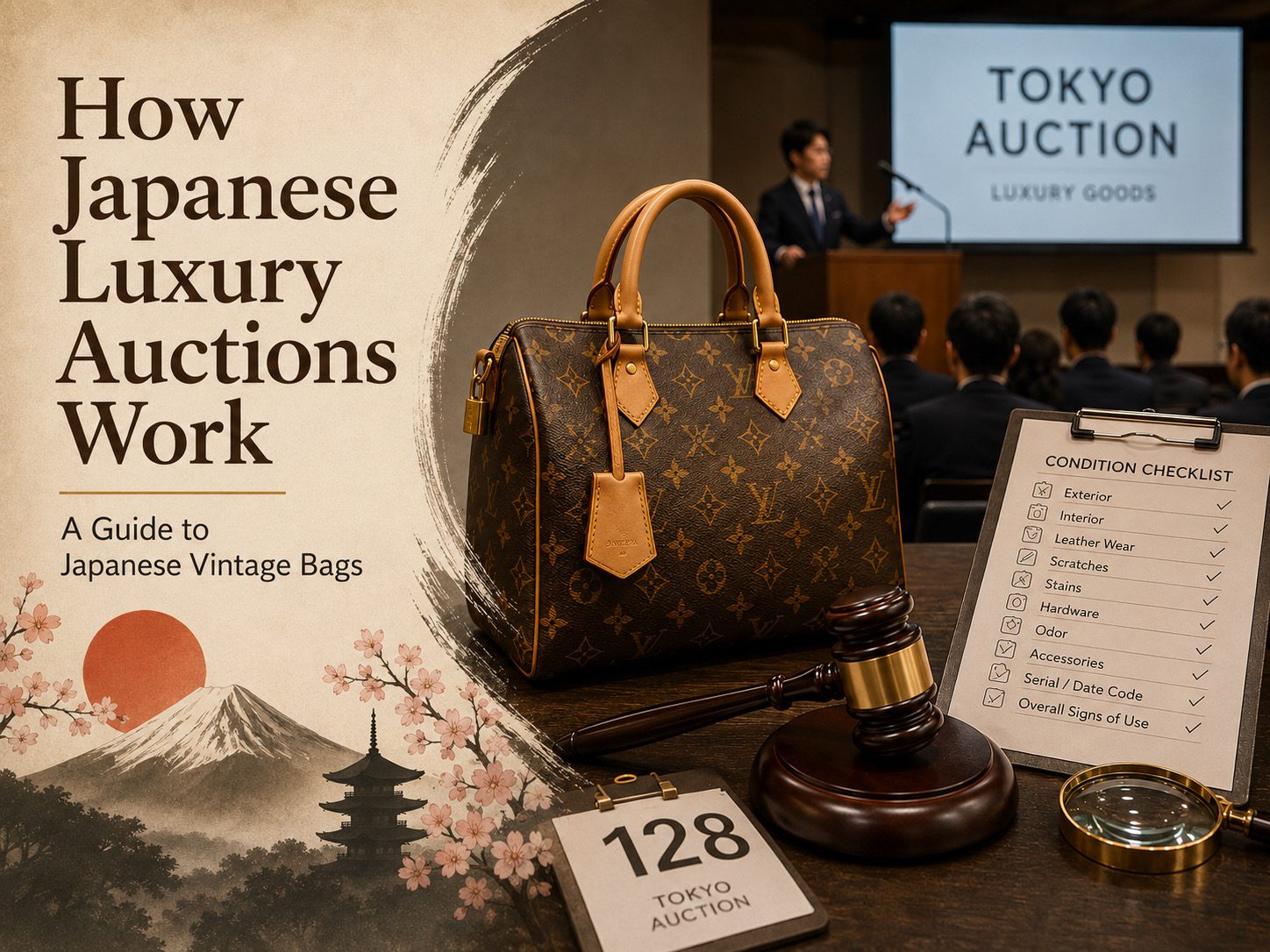
Japan is globally recognized for its remarkably safe and organized secondhand market, especially regarding pre-owned luxury fashion.
Behind many Japanese vintage bags lies a vast, highly regulated B2B ecosystem where professional dealers, recycling stores, and licensed auction houses evaluate and exchange thousands of pre-owned items every week.
For shoppers outside Japan, this market can seem mysterious. So how do Japanese luxury auctions actually work?
What Are Japanese Luxury Auctions?
Japanese luxury auctions are B2B marketplaces strictly reserved for licensed business entities and professional buyers holding secondhand dealer permits (Kobutsu-sho license).
Depending on the platform, thousands of high-end items change hands daily, including handbags, watches, fine jewelry, and rare archive pieces. Key auction houses driving this industry include:
- EcoRing Auction: Known for vast selection across various fashion categories.
- JBA (Japan Brand Auction): A dominant B2B network renowned for trusted luxury fashion deals.
- BRAND OFF Auction: Managed under the Komehyo Group umbrella, setting benchmark standards for luxury authentication.
- Aucnet & Valuence Auctions: Leading digital networks offering extensive catalogs to professional global buyers.
These platforms form the backbone of Japan’s pre-owned luxury supply chain.
Why Auctions Matter for Vintage Bags
Auctions provide access to a large variety of inventory.
Instead of relying on a single store, professional buyers can search through many different pieces.
This is especially useful for vintage products because availability is unpredictable.
A particular vintage bag may not appear every day.
Sometimes the best opportunity is simply waiting for the right piece to become available.
For this reason, sourcing vintage bags in Tokyo often involves patience and careful selection.
How Bags Are Evaluated & Graded
Before any bag is listed for bidding, expert appraisers employed by the auction houses inspect the item. Japan is famous for its standardized Condition Ranking System:
- Rank N / S (New / Unused): Pristine condition, often with original tags or packaging.
- Rank SA / A (Excellent / Mint): Minor signs of handling or storage, but virtually like new.
- Rank AB / B (Good / Normal Vintage): Clear signs of gentle everyday use (minor corner scuffs, light leather patina, hardware micro-scratches), but fully functional and well-maintained.
- Rank BC / C (Fair / Heavily Used): Obvious wear, noticeable stains, structural softening, or minor repair needs.
Appraisers detail these findings on official inspection sheets, noting exterior/interior wear, hardware condition, odor, and serial/date code authenticity.
Even with these guides, learning how to check the condition of a vintage bag is an important skill for becoming a confident buyer.
Why Japanese Auctions Are Interesting
One reason the Japanese resale market is attractive is its depth.
Japan’s strict legal regulations surrounding counterfeit goods (Secondhand Articles Control Act) mean auction houses enforce rigorous authentication processes. Combined with a cultural tradition of taking exceptional care of personal belongings, Japanese auctions yield vintage items in far better condition than many other global markets.
There are many channels through which secondhand luxury products circulate.
This creates opportunities to discover older designs, discontinued models, unusual colors, and vintage styles that may be difficult to find in conventional retail stores.
It also means that sourcing is not simply about searching for the most popular product.
Sometimes a less obvious vintage piece can become the most interesting find.
From Auction to International Customer
After a bag is successfully won at auction, it undergoes further inspection, professional cleaning if necessary, and careful export packaging.
At JapanVintage, bidding at auction is just the beginning. Our goal is to curate these authentic pieces from Japan’s premier auction houses and deliver them seamlessly to fashion lovers worldwide.
If you are new to buying internationally, our complete guide on how to buy vintage bags from Japan explains the customer process step-by-step.
The Japanese Vintage Market
Understanding Japanese luxury auctions gives you a better appreciation of where vintage bags come from.
Behind a single handbag can be an entire network of sellers, buyers, auction houses, dealers, inspectors, and logistics providers.
That is part of what makes Japanese vintage fashion so fascinating.
And ultimately, the auction is only the beginning of the bag’s next journey.
Discover our selection of Japanese vintage bags and explore pieces sourced from Japan.
[…] If you want to understand that process in more detail, read our guide to how Japanese luxury auctions work. […]
[…] article about how Japanese luxury auctions work explains more about this side of the […]
[…] you are curious about this process, you can read how Japanese luxury auctions work to learn more about how these auctions fit into Japan’s secondhand luxury […]
[…] guide to how Japanese luxury auctions work explains this side of the Japanese […]
[…] You can read more about how Japanese luxury auctions work. […]