✈️ Free Express Shipping to USA via JapanPost EMS | 100% Guaranteed Authentic from Tokyo

How We Source Vintage Bags in Tokyo

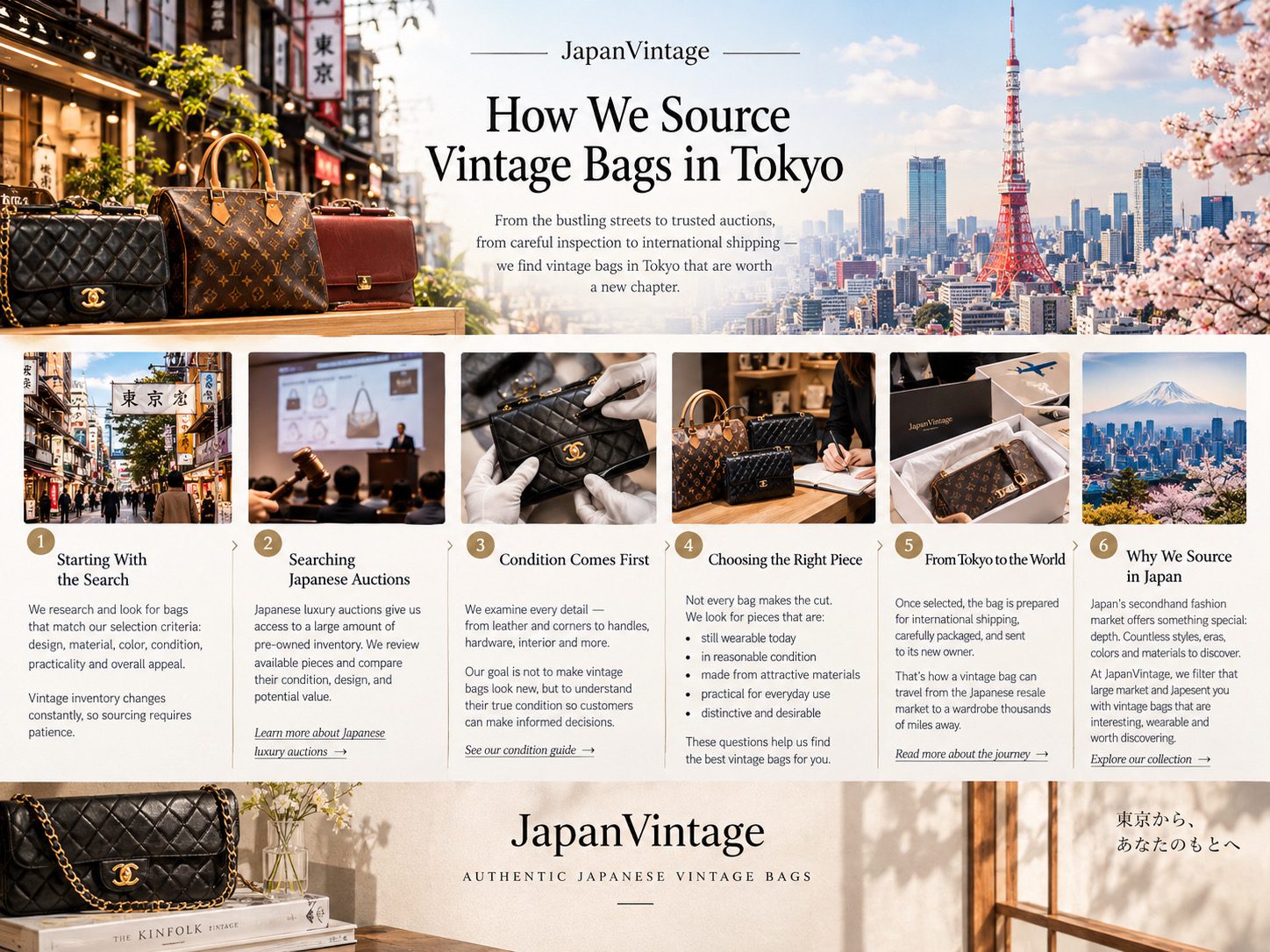
Tokyo is one of the most exciting places to search for vintage fashion. Behind the city’s busy streets is a huge secondhand ecosystem where vintage handbags move between sellers, stores, auctions, and professional buyers.
For JapanVintage, sourcing vintage bags in Tokyo is about more than simply finding recognizable brand names. It is about discovering pieces with character, evaluating their condition carefully, and selecting bags that are worth bringing to a new customer.
Our sourcing process combines research, market knowledge, condition checking, and careful selection. Every bag has its own history, and our goal is to find pieces that can continue that story with someone who appreciates vintage fashion.
Starting With the Search
The sourcing process begins with research.
We look for bags that match our selection criteria, including design, material, color, condition, practicality, brand appeal, and overall character. We also consider whether a particular style is likely to appeal to customers looking for something different from modern mass-market fashion.
The Tokyo secondhand market changes constantly. New inventory appears every day, while interesting pieces can disappear quickly. A bag that is available today may already be sold tomorrow.
That means successful sourcing requires patience. Rather than buying simply because a bag carries a famous name, we take time to compare different pieces and determine which ones offer the right combination of style, condition, and value.
For anyone interested in Tokyo vintage shopping, this constantly changing market is one of the most exciting parts of the experience.
Searching Japanese Auctions
Japanese luxury auctions are an important part of the sourcing process.
Japan has a well-established professional resale and auction market, giving buyers access to a wide range of pre-owned luxury and vintage inventory. These auctions can include handbags from different eras, materials, colors, and collections.
We review available pieces and compare their condition, design, rarity, and potential value. Auction listings can provide useful information, but photographs and descriptions are only the starting point. A professional sourcing process requires looking beyond the brand name and asking whether the individual item is actually worth selecting.
If you are curious about this process, you can read how Japanese luxury auctions work to learn more about how these auctions fit into Japan’s secondhand luxury market.
Condition Comes First
A beautiful photograph does not tell the entire story.
Vintage bags need to be examined carefully because signs of age and previous use are part of what makes each piece unique. At the same time, customers deserve an accurate understanding of the condition before making a purchase.
We pay attention to visible wear, leather condition, corners, handles, hardware, interior condition, stitching, shape, and other details that may affect the appearance or usability of the bag.
The goal is not to pretend that vintage bags are new. Instead, the goal is to understand their actual condition and communicate it clearly so customers can make informed decisions.
A vintage bag with some signs of use can still be beautiful and highly wearable. What matters is understanding what those signs mean and whether they are appropriate for the age, material, and overall character of the piece.
Our guide to vintage bag condition explains some of the details shoppers should look for when evaluating pre-owned handbags.
Choosing the Right Piece
Not every bag that looks interesting becomes part of our selection.
A vintage bag needs to make sense as a complete product. We consider its visual appeal, condition, practicality, and whether it has something that makes it worth discovering.
Before selecting a piece, we consider questions such as:
- Is the design still wearable today?
- Is the condition reasonable for its age?
- Is the material attractive and durable?
- Does the bag have practical everyday use?
- Is the style distinctive?
- Does the color work with modern wardrobes?
- Does the piece have interesting vintage character?
- Would a vintage fashion lover appreciate it?
These questions help narrow down the enormous amount of inventory available in Japan.
For us, sourcing is not about finding the largest possible number of products. It is about filtering the market and choosing pieces that have a reason to be there.
Finding Japanese Vintage Bags Beyond the Obvious
One of the advantages of sourcing in Japan is the variety available beyond the most recognizable luxury names.
The Japanese resale market includes classic designer handbags, older seasonal designs, discontinued models, practical everyday bags, and styles that may be difficult to find elsewhere.
This gives us the opportunity to discover Japanese vintage bags that can offer something different from current collections.
Some pieces immediately stand out because of their design or brand history. Others become interesting after closer inspection because of their material, construction, color, or unusual shape.
This variety is one of the reasons we enjoy searching the Japanese secondhand market.
From Tokyo to the World
Once a bag has been selected, it begins another journey.
The item is prepared for international shipping, carefully packaged, and sent to its new owner. Before leaving Japan, the bag goes through the necessary preparation so that the customer can receive the piece safely and with a clear understanding of what they purchased.
That is how a vintage bag can travel from the Japanese resale market to a wardrobe thousands of miles away.
For customers in the United States, this process creates a direct connection between Japan’s secondhand fashion market and international vintage shoppers.
You can read more about this journey in From Tokyo Auctions to Your Door, where we explain how vintage pieces can make their way from the Japanese market to customers around the world.
Why We Source in Japan
Japan’s secondhand fashion market offers something special: depth.
There are countless styles, eras, colors, materials, and designs to discover. Some pieces are familiar. Others are unexpected.
That variety makes sourcing exciting, but it also makes careful selection important. With so much inventory available, shoppers can easily become overwhelmed by the number of choices.
At JapanVintage, our goal is to filter that large market and present customers with vintage bags from Japan that are interesting, wearable, and worth discovering.
We believe vintage shopping should be about more than simply buying an older bag. It should be about discovering a piece with character, understanding its condition, and finding something that fits naturally into your personal style.
Our sourcing process starts in Tokyo, but the idea is simple: find vintage pieces in Japan that deserve another chapter.
Explore our Japanese vintage bags and see what we have sourced from Japan.
[…] You can also learn more about how we source vintage bags in Tokyo. […]
[…] this reason, sourcing vintage bags in Tokyo often involves patience and careful […]
[…] how we source vintage bags in Tokyo to see how this process […]