✈️ Free Express Shipping to USA via JapanPost EMS | 100% Guaranteed Authentic from Tokyo

A Close Look at Hardware, Stitching, Logos and the Interior

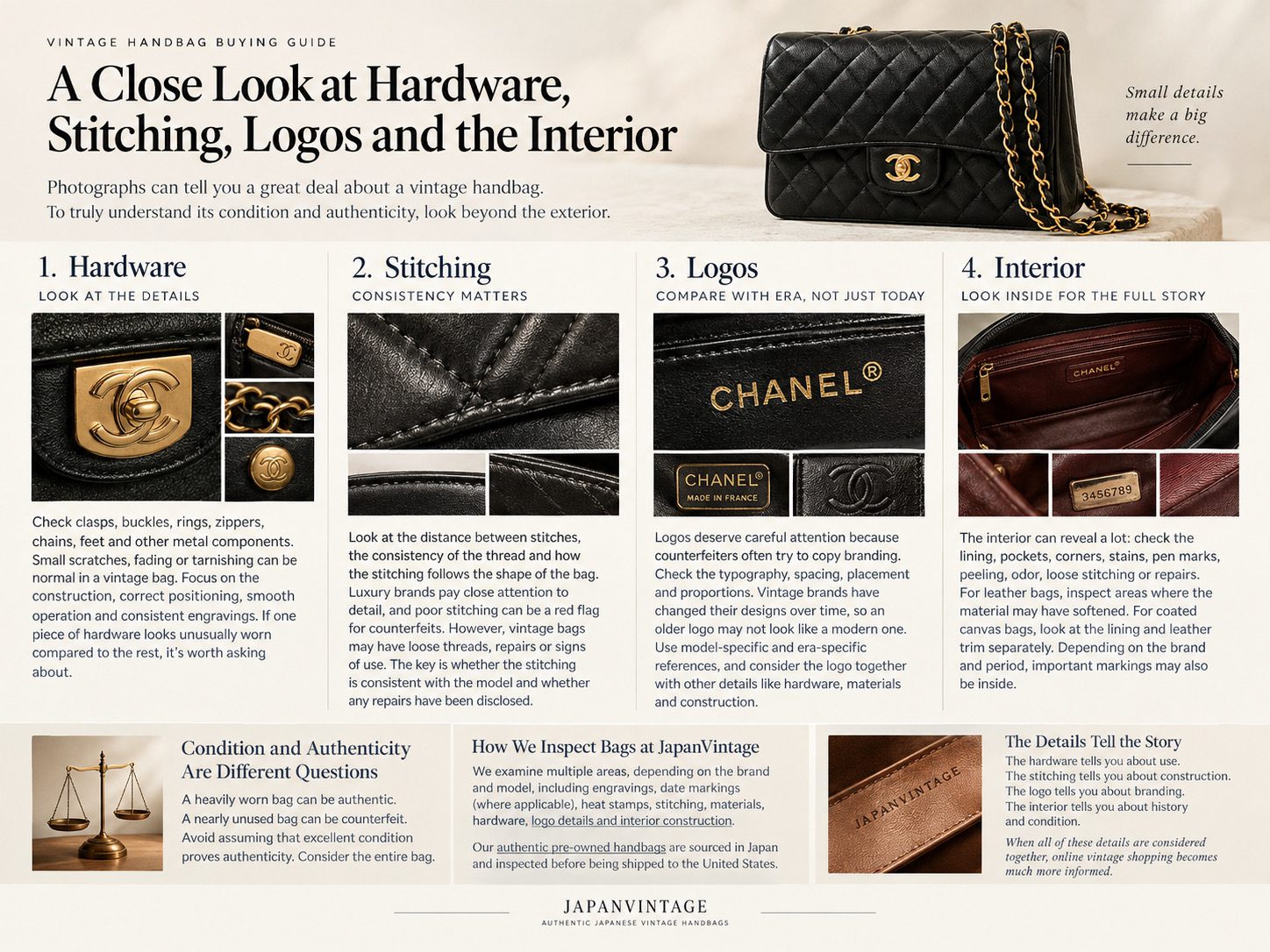
Photographs can tell you a great deal about a vintage handbag.
They can also hide important details.
When buying a pre-owned luxury handbag online, the exterior photograph is only the beginning. A careful buyer should also examine the hardware, stitching, logo markings, and interior.
These areas can reveal information about the handbag’s construction, age, condition, and previous use.
Start With the Hardware
Hardware is one of the easiest areas to overlook.
Look closely at clasps, buckles, rings, zippers, chains, feet, and other metal components.
The first question is not whether the metal looks completely new.
A vintage handbag is a used product, so small scratches, fading, tarnishing, or surface wear can be completely normal.
Instead, look at the construction.
Are the components positioned correctly? Does the clasp operate properly? Are the engravings or markings consistent with the design? Does the hardware appear excessively worn compared with the rest of the handbag?
The relationship between different components can be particularly useful.
For example, if the exterior looks almost unused but one piece of hardware shows unusually heavy damage, the seller should be able to explain the condition.
Examine the Stitching
Stitching is another important detail.
Look at the distance between stitches, the consistency of the thread, and how the stitching follows the shape of the handbag.
Luxury handbags are constructed with considerable attention to detail. Chanel itself identifies poor stitching as one possible warning sign when evaluating counterfeit products.
However, vintage condition needs to be considered.
A genuine vintage handbag can have loose threads, repaired areas, or signs of previous use. Therefore, imperfect stitching does not automatically mean a handbag is counterfeit.
The important question is whether the stitching is consistent with the construction of that particular model and whether any repairs have been disclosed.
Study the Logo
Logos deserve careful attention because counterfeiters often attempt to reproduce branding.
Look at the typography, spacing, placement, and proportions.
Do not simply compare the logo with a modern version found online.
Vintage luxury brands have changed designs and production details over time. A logo from an older handbag may not look identical to the logo used on a current product.
This is why model-specific and era-specific references are useful.
The logo should be considered together with construction, hardware, materials, interior details, and other identifying characteristics.
Do Not Ignore the Interior
The inside of a handbag can tell an important part of its story.
Look at the lining.
Check the pockets.
Inspect the interior corners.
Look for stains, pen marks, peeling, odor, loose stitching, or repairs.
For leather handbags, inspect areas where the material may have softened or changed shape through use.
For coated canvas handbags, inspect the lining and leather trim separately.
The interior is also where many important markings may be located, depending on the brand and production period.
Condition and Authenticity Are Different Questions
One of the most important lessons for vintage shoppers is that condition and authenticity are separate issues.
A heavily worn handbag can be authentic.
A nearly unused handbag can potentially be counterfeit.
Therefore, buyers should avoid assuming that excellent condition proves authenticity.
Likewise, normal vintage wear should not automatically create suspicion.
The best evaluation considers the entire handbag.
How We Inspect Bags at JapanVintage
At JapanVintage, we focus on multiple areas rather than relying on one feature.
Depending on the brand and model, this may include engravings, date-related markings where applicable, heat stamps, stitching, materials, hardware, logo details, and interior construction.
Our authentic pre-owned handbags are sourced in Japan and inspected before being prepared for shipment to the United States.
For customers buying remotely, detailed photographs and clear condition information are especially important.
A vintage handbag should be viewed almost like a small piece of craftsmanship.
The hardware tells you about use.
The stitching tells you about construction.
The logo tells you about branding.
The interior tells you about history and condition.
When all of these details are considered together, online vintage shopping becomes much more informed.