✈️ Free Express Shipping to USA via JapanPost EMS | 100% Guaranteed Authentic from Tokyo

How to Order a Vintage Handbag From Japan

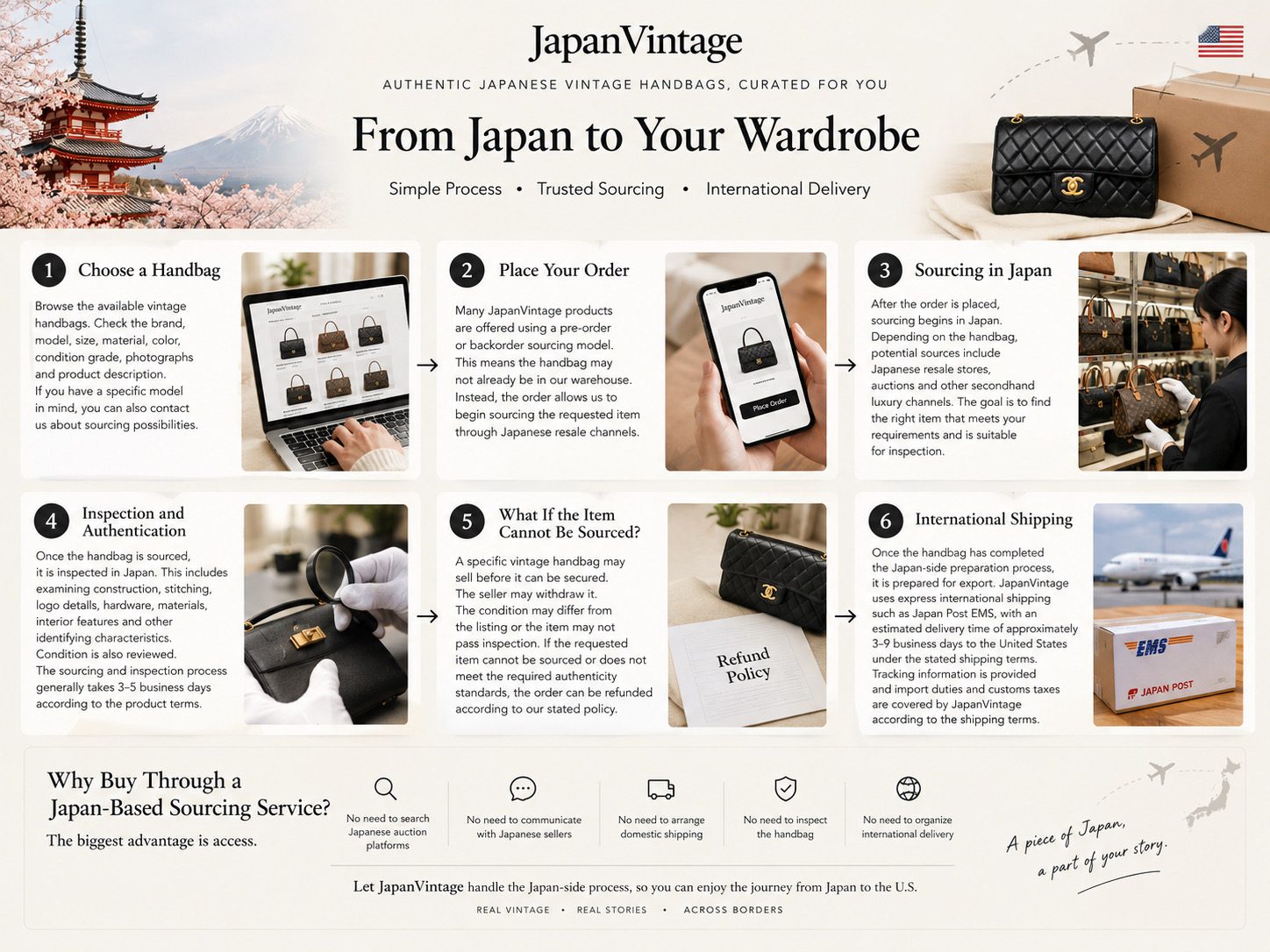
Buying a vintage handbag from Japan can seem complicated when you are shopping from the United States.
Where is the handbag sourced?
How is it inspected?
When is it shipped?
What happens if the requested item cannot be sourced?
And how long does delivery take?
At JapanVintage, the process is designed around sourcing pre-owned handbags in Japan and arranging international delivery to customers in the United States.
Here is how the process works.
Step 1: Choose a Handbag
Start by browsing the available vintage handbags.
Pay attention to the brand, model, size, material, color, condition grade, photographs, and product description.
Because many vintage pieces are unique or available only once, the exact handbag shown in a listing may not remain available indefinitely.
If you have a particular model in mind, you can also contact JapanVintage and ask about sourcing possibilities.
Step 2: Place Your Order
Many JapanVintage products are offered using a pre-order or backorder sourcing model.
This means the handbag may not already be sitting in our warehouse waiting to be shipped.
Instead, the order allows us to begin sourcing the requested item through Japanese resale channels.
This model provides access to a wider range of vintage handbags without requiring every possible model to be held in inventory.
Step 3: Sourcing in Japan
After the order is placed, sourcing begins in Japan.
Depending on the handbag, potential sources can include Japanese resale stores, auctions, and other secondhand luxury channels.
The objective is not simply to locate a handbag with the correct brand name.
The item must also match the product requirements and be suitable for inspection.
Step 4: Inspection and Authentication
Once the handbag is sourced, it is inspected in Japan.
Depending on the brand and model, this can include examining construction, stitching, logo details, hardware, materials, interior features, and other identifying characteristics.
Condition is also reviewed.
This is particularly important because vintage handbags can have small differences between individual pieces.
The sourcing and inspection process generally takes approximately 3–5 business days according to the product terms.
Step 5: What If the Item Cannot Be Sourced?
Vintage sourcing is different from ordering a mass-produced product directly from a brand.
A specific vintage handbag may sell before it can be secured.
The seller may withdraw it.
The condition may differ from the listing.
Or the item may not pass the required inspection.
For this reason, customers should understand the sourcing terms before ordering.
At JapanVintage, if the requested item cannot be successfully sourced or does not meet the required authenticity standards, the order can be refunded according to our stated policy.
Step 6: International Shipping
Once the handbag has completed the Japan-side preparation process, it is prepared for export.
JapanVintage uses express international shipping such as Japan Post EMS, with an estimated delivery time of approximately 3–9 business days to the United States under the stated shipping terms.
Tracking information is provided so customers can follow the shipment.
Import duties and customs taxes are covered by JapanVintage according to the shipping terms shown on qualifying product listings.
Why Buy Through a Japan-Based Sourcing Service?
The biggest advantage is access.
A customer in the United States does not have to search Japanese auction platforms, communicate with Japanese sellers, arrange domestic shipping, inspect the handbag, and organize international delivery independently.
JapanVintage handles the Japan-side process.
If you want to buy vintage handbags from Japan, start by browsing the available pieces.
Vintage shopping is naturally different from buying a new handbag from a department store.
The item already has a history.
The inventory can change quickly.
And the exact piece you want may require sourcing.
But that is also what makes the process interesting.
A handbag can begin its journey in Japan and eventually become part of someone’s wardrobe thousands of miles away in the United States.