✈️ Free Express Shipping to USA via JapanPost EMS | 100% Guaranteed Authentic from Tokyo

From Tokyo Sourcing to Your Door: The Story Behind a Vintage Handbag

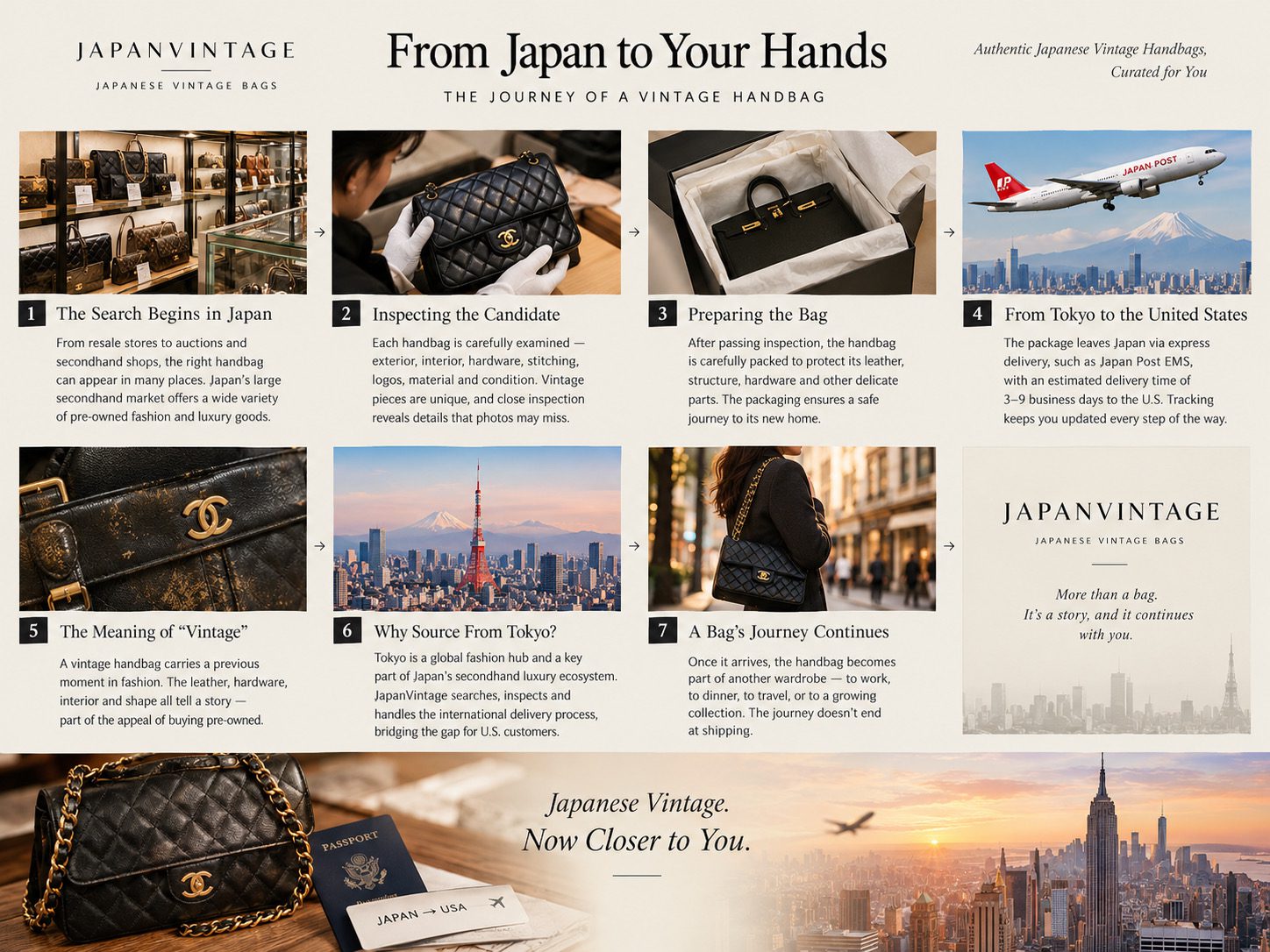
When a customer in the United States opens a package containing a vintage handbag from Japan, the story of that handbag does not begin with the shipping label.
It begins much earlier.
Perhaps the handbag spent years in a Japanese wardrobe.
Perhaps it was traded through a resale store.
Perhaps it appeared through a Japanese auction or another secondhand channel.
Eventually, it entered the sourcing process and began another journey: from Japan to the United States.
The Search Begins in Japan
Finding a particular vintage handbag is not always as simple as searching one website.
Vintage inventory changes constantly.
A handbag may appear in a resale store one day and disappear shortly afterward.
Another piece may be listed through an auction.
Some models are common.
Others require much more searching.
This is one reason Japan’s secondhand market is interesting for international buyers.
There is a large ecosystem of pre-owned fashion and luxury goods across the country.
For a Japan-based sourcing business, the challenge is identifying pieces that match what customers are looking for.
Inspecting the Candidate
Once a potential handbag is found, the work is not finished.
The handbag needs to be examined.
The exterior is checked.
The interior is checked.
Hardware is inspected.
Stitching and logos are examined.
The material is reviewed.
The condition is compared with the listing information.
Vintage handbags are individual products, so the physical condition of one example can be very different from another example of the same model.
A photograph may show the general appearance, but close inspection can reveal details that are easy to miss on a screen.
Preparing the Bag
After the handbag has been sourced and passed the required inspection process, it needs to be prepared for its international journey.
Packaging matters because a vintage handbag may have delicate leather, structured panels, hardware, handles, or other components that need protection during transportation.
The goal is to keep the handbag secure while avoiding unnecessary pressure or deformation.
For a customer thousands of miles away, the package is the final physical connection between the Japanese sourcing process and the American delivery address.
From Tokyo to the United States
Once prepared, the package leaves Japan.
The destination may be New York, California, Texas, Florida, or somewhere else across the United States.
The distance is significant, but modern express shipping makes international vintage shopping practical.
JapanVintage uses express delivery such as Japan Post EMS, with an estimated delivery period of approximately 3–9 business days to the United States under the stated shipping terms.
Tracking allows the customer to follow the package as it moves through the international delivery network.
The Meaning of “Vintage”
A vintage handbag is more than an old product.
It represents a previous moment in fashion.
The leather may show how it was used.
The hardware may carry small traces of its previous life.
The interior may have marks from another owner.
Even the shape can tell a story.
This is part of the appeal of buying pre-owned.
A new handbag begins its story with you.
A vintage handbag arrives with part of its story already written.
Why Source From Tokyo?
Tokyo is one of the world’s major fashion cities and sits within Japan’s broader secondhand luxury ecosystem.
For American shoppers, accessing this market directly can be difficult.
Language, payment methods, domestic shipping, Japanese auction platforms, and authentication considerations can all create additional barriers.
JapanVintage is designed to bridge that gap.
We search for vintage handbags in Japan, inspect them before export, and arrange international delivery for customers in the United States.
You can explore our collection of vintage handbags from Tokyo.
A Bag’s Journey Does Not End at Shipping
The most interesting part of vintage sourcing is that the journey continues after the package arrives.
The handbag becomes part of another wardrobe.
It may be carried to work.
It may accompany someone to dinner.
It may travel across the country.
Or it may become part of a growing collection.
That is the idea behind JapanVintage.
We are not simply moving handbags from one country to another.
We are connecting Japanese vintage fashion with customers who appreciate the history, design, and individuality of pre-owned luxury.
From a Japanese resale source to a carefully prepared package, every handbag has a journey.
And for the next owner, that journey continues in America.