✈️ Free Express Shipping to USA via JapanPost EMS | 100% Guaranteed Authentic from Tokyo

From Tokyo Auctions to Your Door: The Journey of Japanese Vintage Bags

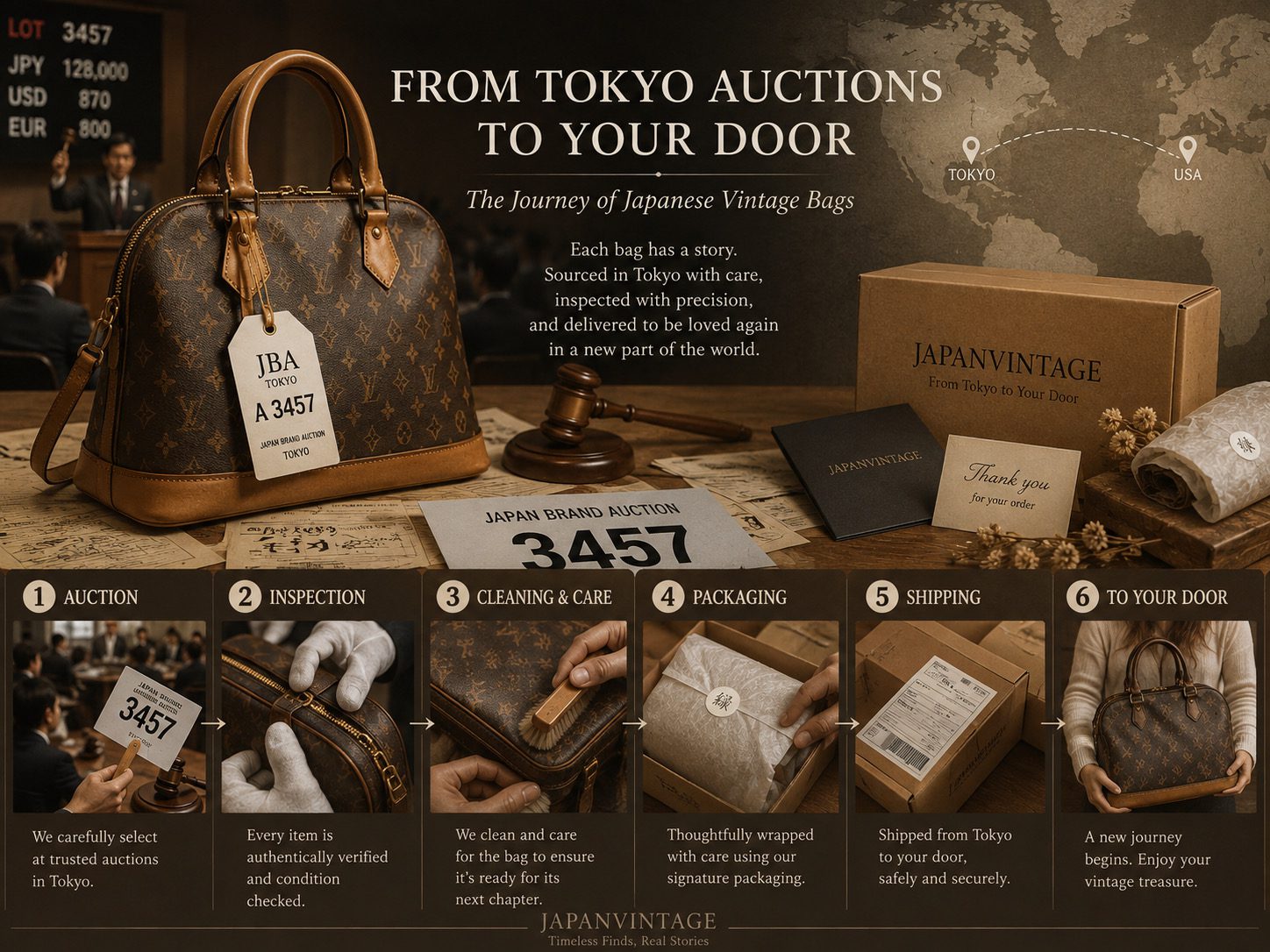
A vintage bag can look simple when it arrives at your doorstep. You open the package, remove the protective wrapping, and there it is — a bag with years of history, character, and a story of its own.
But what happens before that moment?
For many Japanese vintage bags, the journey begins inside Japan’s highly structured B2B luxury auction networks, professional resale markets, or specialty vintage dealers across Tokyo.
At JapanVintage, sourcing is not simply about finding a beautiful bag. It is about selecting pieces from trusted B2B networks, verifying their professional condition ratings, preparing them carefully, and ensuring they arrive safely at their new homes overseas.
Where Japanese Vintage Bags Begin
Japan has one of the world’s most sophisticated secondhand luxury ecosystems. Vintage handbags move through established professional auction houses, licensed dealers, recycling shops, and specialty stores.
Professional buyers rely on major auction platforms across Japan, such as:
- EcoRing Auction: Famous for its massive volume and diverse range of secondhand fashion.
- JBA (Japan Brand Auction): One of the largest and most respected B2B luxury platforms in Japan.
- BRAND OFF (Komehyo Group): A premier auction house known for strict anti-counterfeiting standards and high-end luxury goods.
- Aucnet: A pioneer in digital B2B luxury auctions connecting professional buyers globally.
Some pieces are easy to find. Others require weeks of patience and careful reviewing of live bidding catalogs across these platforms before finding an item that meets our standards.
This thorough process is why buying vintage bags from Japan offers such a unique experience. If you want to understand that process in more detail, read our guide to how Japanese luxury auctions work.
The First Step: Finding the Right Bag
A good sourcing process begins long before the live auction bidding starts. We evaluate the brand, model, material, color, and official grading reports provided by auction inspectors.
Photos and inspection notes are carefully reviewed because vintage bags naturally show signs of previous use. The goal is not necessarily to find a bag that looks brand new, but to find a genuine vintage piece whose overall character, condition rank, and price align perfectly.
You can also learn more about how we source vintage bags in Tokyo.
Condition Matters
Vintage shopping requires a different mindset from buying a newly manufactured product. Japanese auctions use strict standardized grading systems (ranging from Unused/Rank N down to Rank C) to ensure full transparency.
While small scratches, soft leather, patina, or hardware wear can be part of a vintage bag’s authentic story, significant structural damage should never be overlooked. That is why understanding how to check the condition of a vintage bag is essential for anyone shopping for vintage fashion.
From Tokyo to Your Door
Once a bag has been successfully won at auction, the work continues.
The bag undergoes a secondary in-house inspection and is carefully prepared for international transit. We protect the exterior leather, cushion delicate hardware, and preserve the bag’s structure before sealing it inside secure packaging.
For an item that may have spent decades in circulation, proper packaging is a crucial final step. Whether shipping to the US or anywhere else in the world, our objective remains simple: delivering your piece safely and exactly as described.
More Than Just a Bag
A vintage handbag is more than an accessory. It is a piece of fashion history that has traveled through Japan’s premier resale market before finding its place in your wardrobe.
At JapanVintage, we make that journey transparent, accessible, and enjoyable.
Explore our selection of vintage bags from Japan and discover a piece with a story of its own.
[…] guide to vintage bag condition explains some of the details shoppers should look for when evaluating pre-owned […]